Lesson
The Establishment Clause — How Separate Are Church and State?

The original thirteen states that formed the United States included individuals from a variety of religious traditions. To ensure that the national government respected freedom of belief, freedom of conscience, and freedom of religious practice, the First Amendment prohibited the federal government from either establishing a national church or interfering with existing state religions. Since then the Supreme Court has created various "tests" to determine if government practices violate the Establishment Clause of the First Amendment. This lesson explores the history and principles behind this clause.
Founding Principles
Virtues
Objectives
- Students will explain the historical origins of religious liberty in America
- Students will analyze the Founders’ understanding of the relationship between church and state
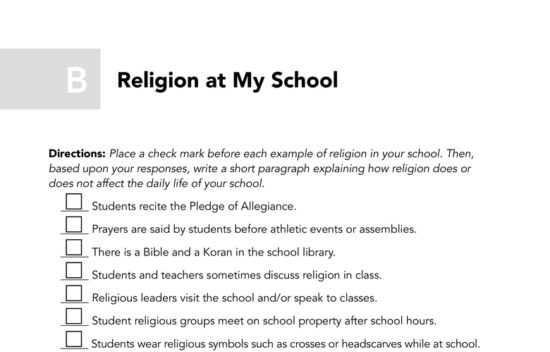
- Students will analyze religious practices in their schools
- Students will apply the principles of the Establishment Clause
- Students will evaluate and assess the constitutional reasoning behind Establishment cases
- Students will appreciate the enduring legacy of the Founders’ commitment to religious liberty
Materials
Lesson Components


Lesson plan
60 minClick a phase to open it
Standards
Advanced Placement
- NCHS
Check whether this resource aligns with your state’s standards →