Lesson
Grover Cleveland and the Texas Seed Bill Veto
Guiding question
Why would the President adhere to the Constitution during a crisis?
Founding Principles
Individual Responsibility, Checks and Balances, Separation of Powers
Virtues
Objectives:
Students will:
- Understand Grover Cleveland’s philosophy of limited government.
- Analyze Cleveland’s actions as President in light of the Constitution.
- Evaluate the prudence of Cleveland’s veto of the Texas Seed Bill.
- Assess whether Cleveland deserved the “homage” or the “enmity” of the nation.
Materials
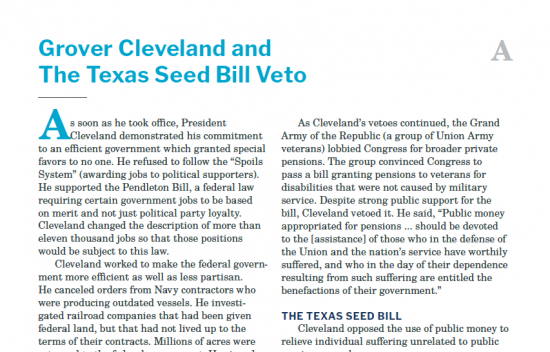
- Handout A: Grover Cleveland and the Texas Seed Bill Veto
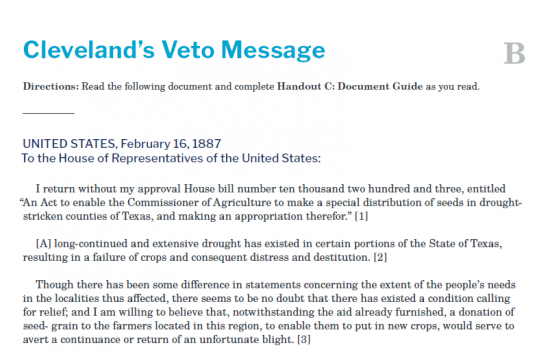
- Handout B: Cleveland’s Veto Message
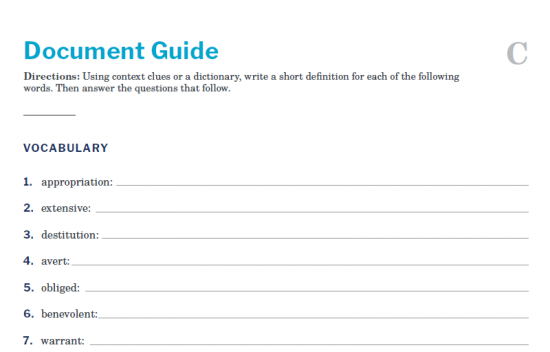
- Handout C: Document Guide
Lesson Components
Lesson plan
More Information
To create a context for this lesson, have students complete Constitutional Connection: The President and Federal Power.
Standards
Related materials

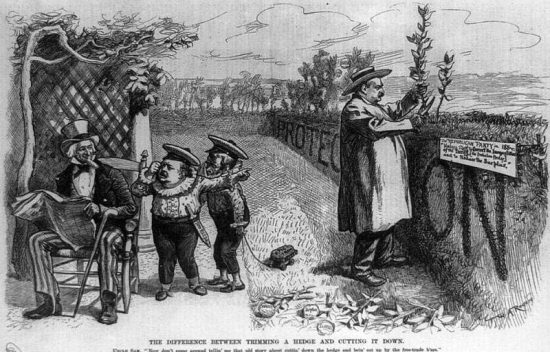
Cleveland understood his constitutional legislative responsibility as preventing harmful bills from becoming law, rather than promoting what he saw as beneficial ones. Using the veto, Cleveland stopped the federal government from taking on what he saw as a “paternal” role towards citizens. This eLesson focuses on Cleveland’s veto of the Texas Seed Bill, which would have provided seeds to drought-stricken farmers who had eaten their seed corn to survive.

A review lesson for Unit 7 (1945-1980) to study changes and continuities in the philosophy of modern liberation.