Lesson
Lyndon Johnson, Richard Nixon, and the War Powers Resolution
Guiding question
Did the War Powers Resolution take too much power away from the President, or did it take too much power away from Congress?

Founding Principles
Objectives:
Students will:
- Understand events leading up to passage of the War Powers Resolution.
- Assess the meaning of constitutional provisions about war.
- Evaluate the constitutionality of the War Powers Resolution.
Materials
- Handout A: Lyndon Johnson, Richard Nixon, and the War Powers Resolution
- Handout B: War and the Constitutional Convention
- Handout C: The War Powers Resolution
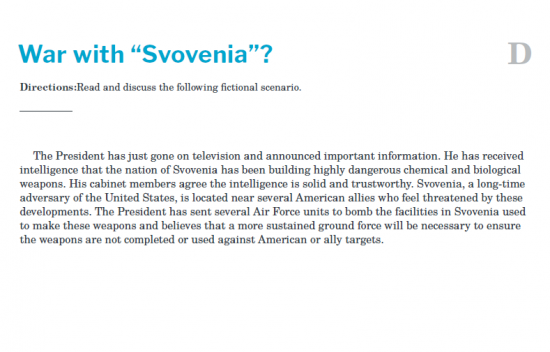
- Handout D: War with Svovenia?
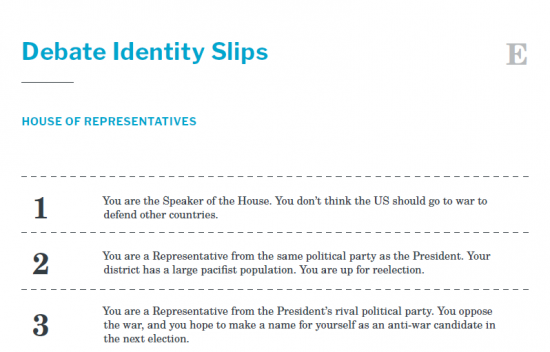
- Handout E: Debate Identity SlipsTo create a context for
this lesson, students
complete Constitutional
Connection: War and
the Constitution.
Lesson Components


Lesson plan
More Information
To create a context for this lesson, students complete Constitutional Connection: War and the Constitution.
Standards
Related materials

The U.S. Constitution divides war powers between the president and Congress. The delegates to the Constitutional Convention were focused on creating a government powerful enough to protect liberty, but not so powerful that it would threaten liberty. They worked carefully to craft the war powers of the new government, knowing that history was full of examples of war, so that war powers were necessary, but also of rulers who had abused the power and endangered liberty in order to make war.

How has the president been able to decide when the United States goes to war without Congress deliberating and declaring war? In this video, BRI Senior Teaching Fellow Tony Williams and Associate Professor of Political Science at Rochester Institute of Technology, Sarah Burns, discuss her new book, "The Politics of War Powers: The Theory and History of Presidential Unilateralism." What is the proper constitutional balance between the Congress and presidency when it comes to war powers? What might the remedy be for restoring the balance and the separation of powers?