Lesson
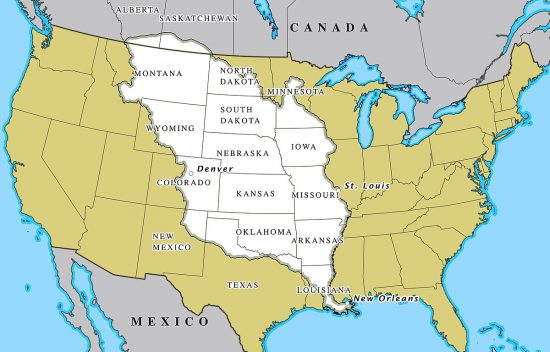
Thomas Jefferson and the Louisiana Purchase
Guiding question
Why did President Thomas Jefferson, an advocate of strict construction of federal power, approve of the Louisiana Purchase?
Objectives:
Students will:
- Understand the events leading up to the Louisiana Purchase.
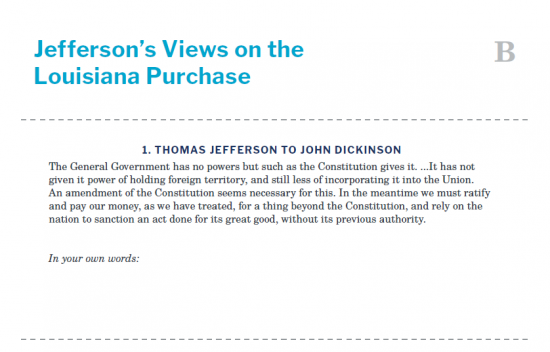
- Analyze Thomas Jefferson’s views of the Purchase’s constitutionality.
- Assess the constitutionality of the Louisiana Purchase.
- Appreciate Jefferson’s dilemma between expedience and constitutional scruples.
Materials
- Handout A: Thomas Jefferson and the Louisiana Purchase
- Handout B: Jefferson’s Views on the Louisiana Purchase
Lesson Components

Lesson plan
More Information
To create a context for this lesson, have students complete Constitutional Connection: The President and Federal Power.
Standards
Related materials

Thomas Jefferson had always feared the costs of loose construction of the powers delegated to the national government in the Constitution, and the Constitution was silent about acquiring lands from other countries. Jefferson urged bringing the issue to the people to approve with a constitutional amendment, but Congress disregarded his draft amendments. The Senate ratified the Louisiana Purchase Treaty in October of 1803. While Jefferson did his best to follow what he believed was proper constitutional procedure, not enough of his contemporaries agreed with him and he eventually assented.