Lesson
Underlying and Immediate Causes of the Civil War Timeline
Guiding question
What were the underlying causes of the Civil War?
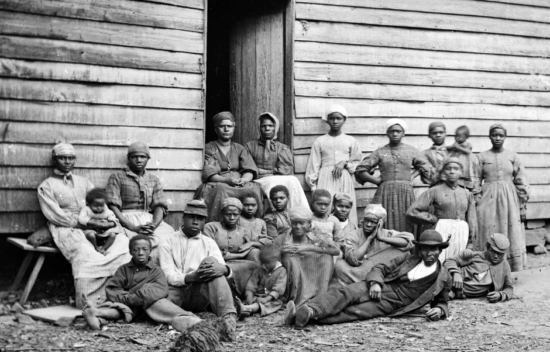
Founding Principles
Natural/Inalienable Rights, Consent of the Governed, Majority Rule / Minority Rights
Virtues
Guiding Questions
- What were the underlying causes of the Civil War?
- How did slavery divide the nation?
Objectives
- Students will:
- Analyze the causes and effects of major conflicts and events leading up to the Civil War.
- Evaluate the effectiveness of political compromises and legislative actions.
- Interpret primary sources to understand historical perspectives.
Materials
Student Resources:
- America in Transition Interactive Timeline
- Civil War Interactive Timeline
- Countdown to War Graphic Organizer
Teacher Resources:
- Underlying and Immediate Causes of the Civil War Primary Source Set
- Long butcher paper, string, or another method to create a physical timeline across a classroom wall
Lesson Components
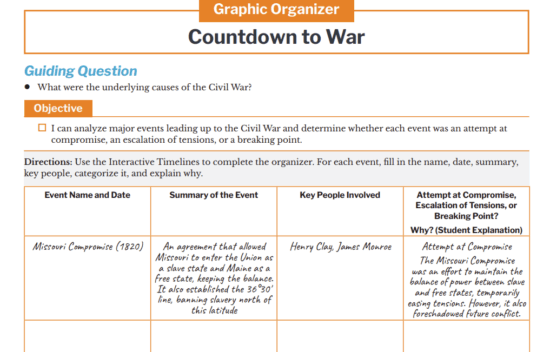
ActivityCountdown to Civil War Middle School Graphic Organizer
Analyze the causes and effects of major conflicts and events leading up to the Civil War.
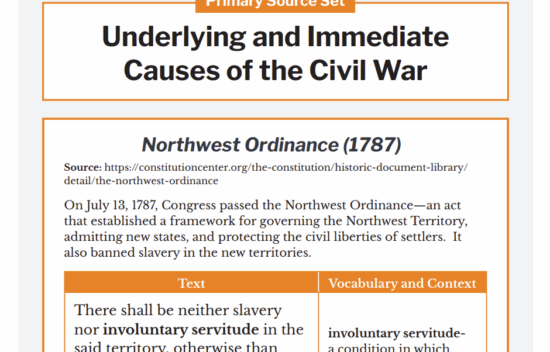
ActivityUnderlying and Immediate Causes of the Civil War Primary Source Set
Evaluate the effectiveness of political compromises and legislative actions through primary sources.
ActivityCivil War Interactive Timeline
How did fundamental disagreements over slavery and its expansion lead to a devastating civil war that transformed the United States?
ActivityAmerica in Transition, Antebellum Era Timeline
How did Americans and democratic institutions respond to the rapid economic changes of the early 19th century?
Lesson plan
Click a phase to open it
More Information
Facilitation Notes
- This lesson explores the causes of the Civil War using two key resources: the America in Transition Interactive Timeline and the Civil War Interactive Timeline. These tools help students understand both the underlying tensions and immediate triggers that led to war.
- It is important to acknowledge that slavery is morally wrong and fundamentally violates natural rights and equality. Some of the perspectives presented in this lesson are historically accurate but controversial. They are included not to legitimize or justify these views, but to understand the full scope of beliefs that shaped the nation’s history. This historical examination allows students to critically engage with the past and recognize the importance of natural rights and equality.