Lesson
Woodrow Wilson and the Espionage Act
Guiding question
Was the Espionage Act of 1917, signed into law by President Woodrow Wilson, a constitutional war measure?

Founding Principles
Objectives:
Students will:
- Understand Woodrow Wilson’s fear of the “poison of disloyalty” in the US.
- Understand challenges to civil liberties in the US before and during World War I.
- Assess constitutional limits on free speech and whether they change during wartime.
- Evaluate the constitutionality of the 1917 Espionage Act.
Materials
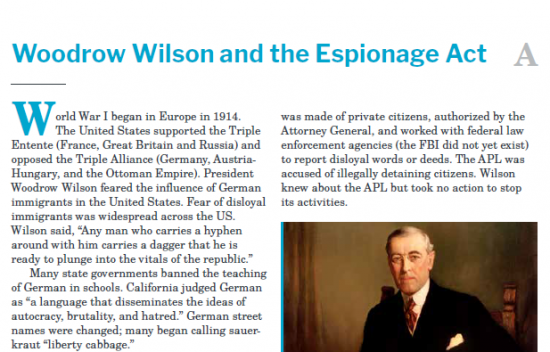
- Handout A: Woodrow Wilson and the Espionage Act
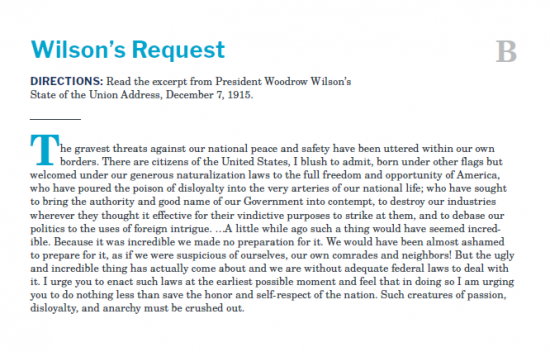
- Handout B: Wilson’s Request
- Handout C: The Espionage Act (1917)
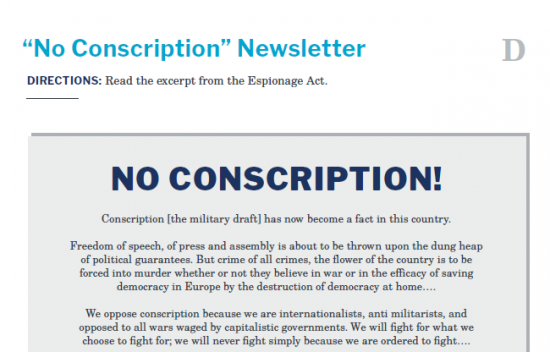
- Handout D: “No Conscription” Newsletter
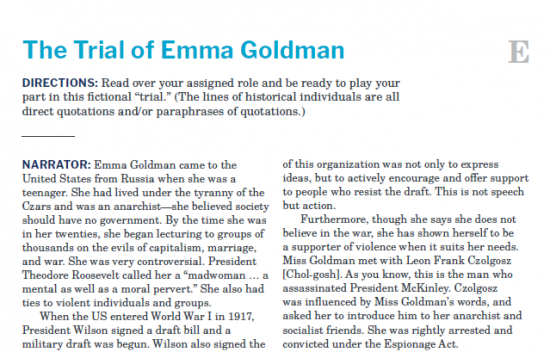
- Handout E: The “Trial of Emma Goldman”
Lesson Components

Lesson plan
More Information
To create a context for this lesson, have students complete Constitutional Connection: War and the Constitution.
Standards
Related materials

The Constitution was written in the summer of 1787 in Philadelphia, Pennsylvania, by delegates from 12 states, in order to replace the Articles of Confederation with a new form of government. It created a federal system with a national government composed of 3 separated powers, and included both reserved and concurrent powers of states.
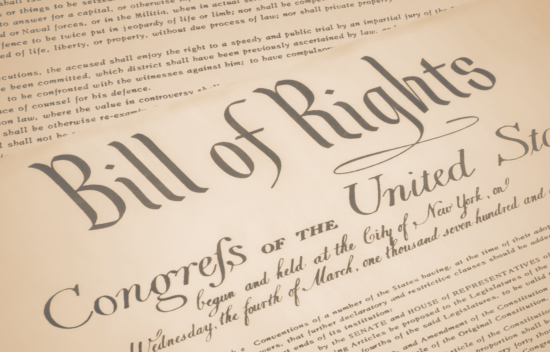
The first 10 amendments to the Constitution make up the Bill of Rights. James Madison wrote the amendments, which list specific prohibitions on governmental power, in response to calls from several states for greater constitutional protection for individual liberties.

In 1918, the Sedition Act of 1918, which amended the Espionage Act of 1917, was enacted. This Wilson-era Act imposed harsh freedom-of-speech restrictions in order to sustain domestic war propaganda and suppress public opposition to the war. They were upheld by the Supreme Court and remained in place until 1921. In this dialogue, Tony and Joshua discuss the importance of staying vigilant against government violations of free expression; should wartime circumstances change the types of free-speech protections that are afforded to Americans under the First Amendment?
