Unit
Unit 7: Civil Rights and Civil Liberties
Guiding question
How do individuals, groups, and government interact to protect and promote civil rights and civil liberties in the United States?

Guiding Question:
- How do individuals, groups, and government interact to protect and promote civil rights and civil liberties in the United States?
Objectives:
- Students will differentiate between natural rights and civil rights, understanding how both are essential components of a just society.
- Students will explain the concept of equal protection under the law and its role in ensuring individual rights and preventing discrimination.
- Students will analyze the Bill of Rights and its incorporation through the Fourteenth Amendment’s Due Process Clause, including key Supreme Court cases that have shaped our understanding of due process protections.
- Students will evaluate the role of the Supreme Court and other branches of government in interpreting and upholding civil liberties.
- Students will discuss the ongoing debate about the scope of individual rights and the scope of government authority.
- Students will analyze the historical evolution of civil rights and civil liberties, including key social movements and landmark legislation.
- Students will apply their civil rights and civil liberties knowledge to contemporary issues and debates, such as gun control, abortion, and affirmative action.
Teacher resource
Unit 7: Civil Rights and Civil Liberties Inquiry Organizer
How do individuals, groups, and the government interact to protect and promote civil rights and civil liberties in the United States?
Lessons

An introductory lesson that sparks thinking about civil rights and civil liberties before beginning a unit.

Introduce the rights protected by the first amendment.

How has the Second Amendment been interpreted by the Supreme Court, and what factors have influenced the constitutional understanding of the Second Amendment?

What are various perspectives on gun rights and gun control?

How does the concept of cruel and unusual punishment realtes to the death penalty?

How has the death penalty as it relates to the Eighth Amendment has changed over time?
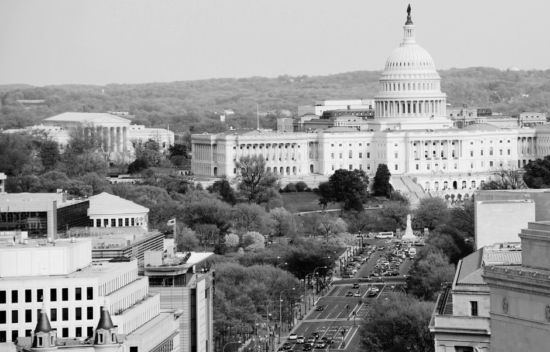
Is the Supreme Court the best branch of government to protect civil liberties?
Unit resources

Images for students to explore as a part of the Civil Rights and Civil Liberties lesson.
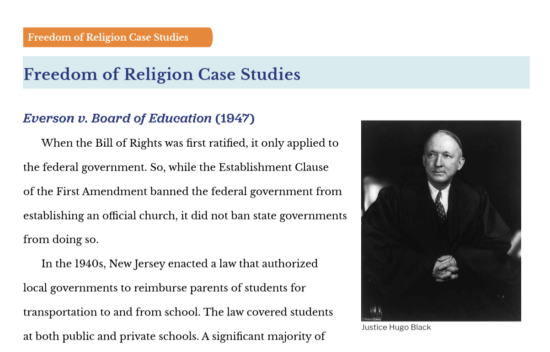
Case studies on landmark freedom of religion Supreme Court cases.

Case studies on landmark freedom of speech Supreme Court cases.

Case studies on landmark freedom of the press Supreme Court cases.

A card sorting interactive that helps students define the fourth, fifth and sixth amendments.

A guide to help students explore perspectives on gun control and develop evidence-based arguments.

Eight primary sources including Founding era documents and the text of the second amendment supreme case majority and dissenting opinions to help students analyze the Second Amendment.

Case studies on landmark Second Amendment Supreme Court cases.

A collection of primary sources from the Founding that demonstrate the Founders believed religious liberty was a natural right.

Case studies on landmark rights of the accused Supreme Court cases.

Explore the constitutional protections for individuals accused of crimes; each card presents a real-world situation, explains the relevant constitutional basis, and references key Supreme Court rulings.

A template to explore Supreme Court Cases related to the Fourth, Fifth, and Sixth amendments.