Lesson
George Washington and Prudence
Founding Principles
Virtues
Guiding questions
Essential Question
- How can prudence benefit decision-making?
Guiding Questions
- What does prudence mean? What are examples of prudence that you observe today?
- How did George Washington’s prudence influence the early republic? How did it influence what we value in both citizens and leaders?
Learning Objectives
- Students will identify George Washington’s actions as examples of prudence in leadership.
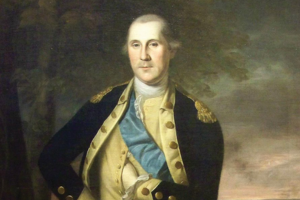
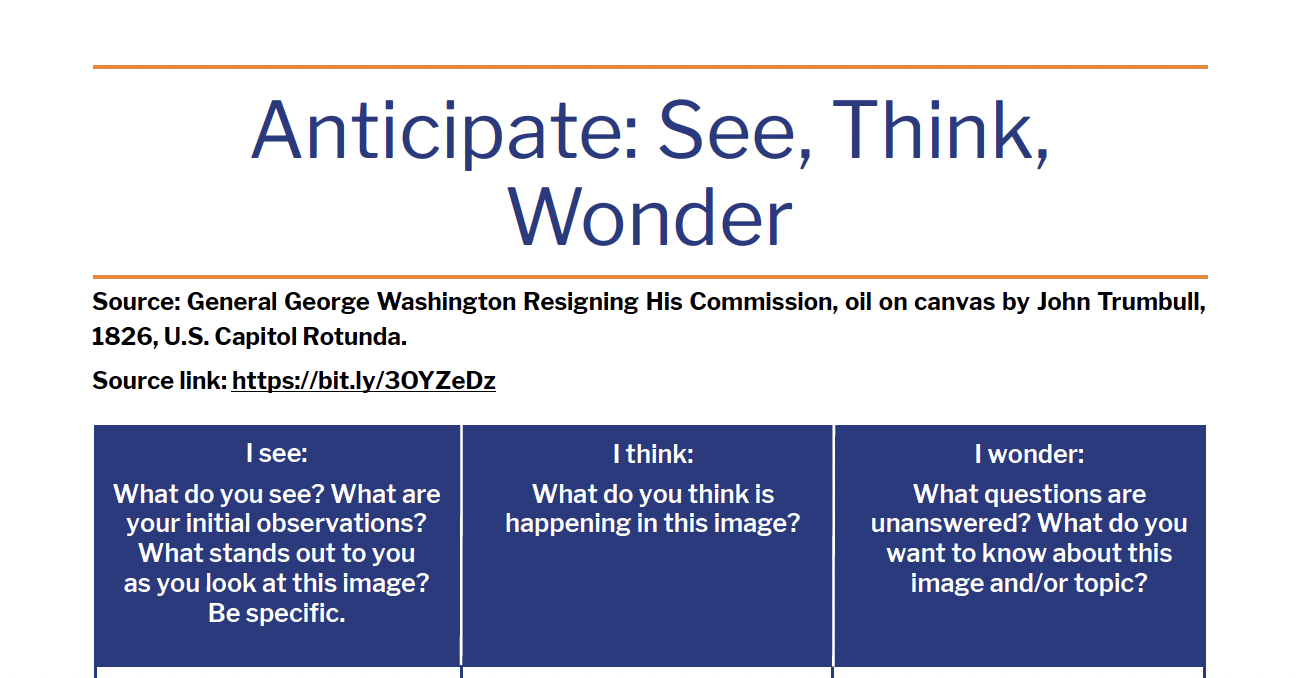
- Students will analyze an image of Washington and the story of the Newburgh Conspiracy to understand how he used prudence to make decisions.
- Students will describe the barriers that make it challenging to act with prudence. Students will identify ways to overcome these barriers to make reasoned decisions and discern the right course of action.
Materials
Student Resources
- Anticipate: See, Think, Wonder
- Close-Reading Washington in Trumbull’s Art
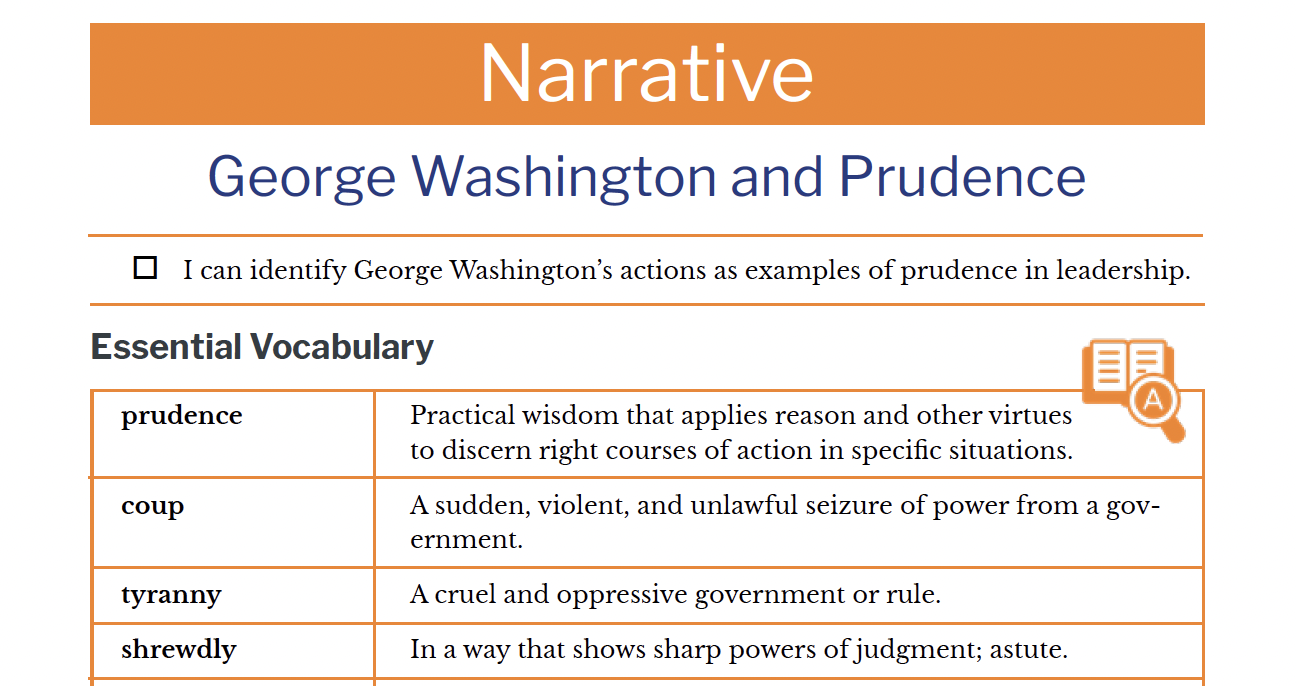
- George Washington and Prudence Narrative
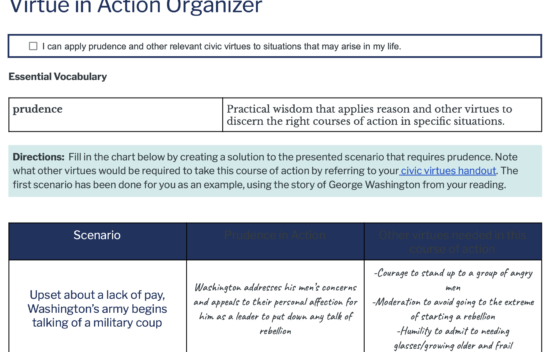
- Virtue in Action Organizer
Teacher Resources
- Analysis Questions
- Virtue in Action
- Journal Activity
- Sources for Further Reading
- Virtue Across the Curriculum
Lesson Components
Lesson plan
Key Terms
- Prudence
- Practical wisdom that applies reason and other virtues to discern the right courses of action in specific situations.
- Coup
- A sudden, violent, and unlawful seizure of power from a government.
- Tyranny
- Cruel and oppressive government or rule.
- Shrewdly
- In a way that shows sharp powers of judgment; astute.
- Mollify
- Appease the anger or anxiety of (someone).
More Information
Procedures
- The following lesson asks students to consider the virtue of prudence.
- Students will engage with the story of George Washington as an exemplar of prudence as they consider the questions: How can prudence benefit decision-making?
- The main activity in this lesson requires students to read and analyze a narrative that explores how George Washington led the early republic with prudence. Students may work individually, in pairs, or small groups as best fits your classroom. The analysis questions provided can be used to help students comprehend and think critically about the content. As the teacher, you can decide which questions best fit your students’ needs and time restraints.
- The lesson includes a variety of activities and suggestions for your classroom. Time estimates are included in the activities so that you can decide what’s most appropriate for your teaching.
- Lastly, the lesson includes sources used in this lesson for further reading and suggestions for cross-curricular connections.
Standards
Related materials
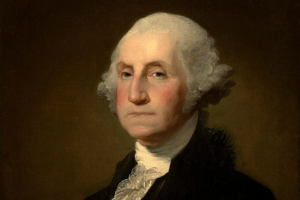
Washington secured American independence as commander of the Continental Army and established traditions as the nation’s first president.

Among the different constitutional traditions George Washington established as America’s first president, perhaps one of the more overlooked was the creation of the cabinet. Join us today as Dr. Lindsay Chervinsky, Scholar in Residence at the Institute for Thomas Paine Studies at Iona College, and BRI Senior Teaching Fellow Tony Williams discuss her new book, "The Cabinet: George Washington and the Creation of an American Institution." In this episode, Dr. Chervinsky explores topics such as how Washington’s military experience shaped the cabinet, how cabinet members were picked, and the famous Jefferson-Hamilton dispute of the early republic. What historical precedents did Washington establish for the American presidency related to the principles of republicanism and separation of powers?"

By the end of this section, you will explain how and why competition intensified conflicts among peoples and nations from 1754 to 1800.