Lesson
International Relations and the Constitutional Separation of Powers
Guiding question
What powers does the President have as chief diplomat, and in what ways can the other branches check those powers?

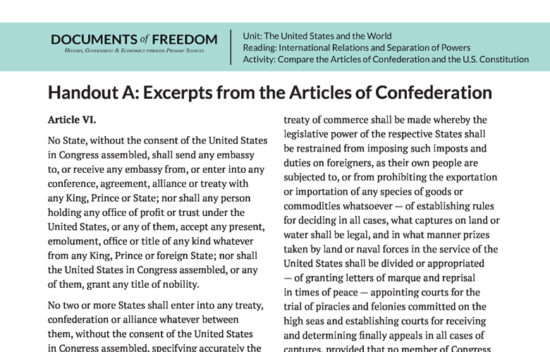
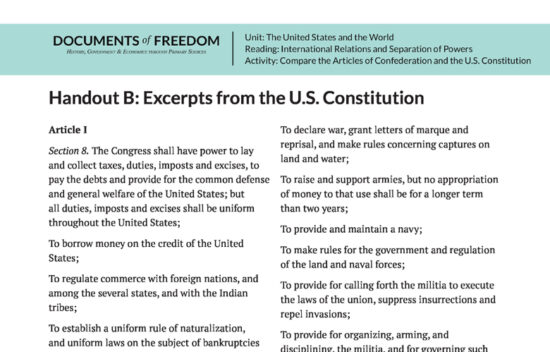
In 1787 the Constitution granted significant new powers to the central government, including those traditionally held by sovereign nations. In response to Anti-Federalist concerns about a too-powerful central government, James Madison explained that the new system of government was designed to work with human nature.
Objectives
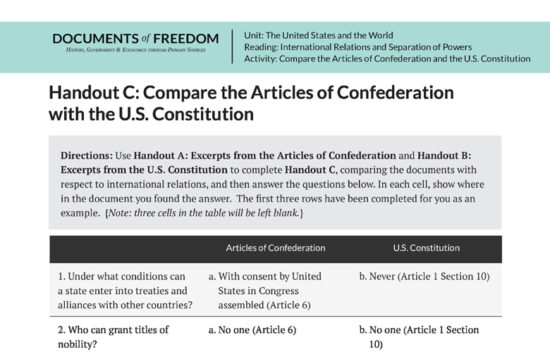
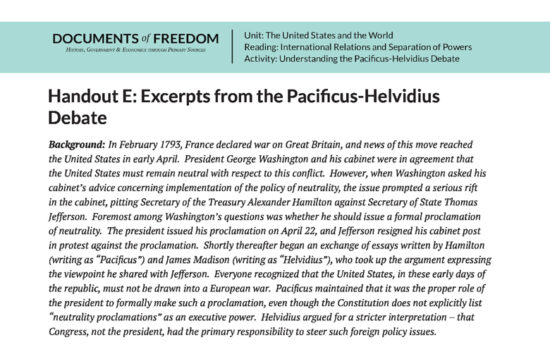
Students will be able to analyze and explain the powers and the limitations of the president in their role as chief diplomat, both historically and currently.
Materials
Lesson Components

Lesson plan
Click a phase to open it
Key Terms
- democracy
- Parliament
- Constitution
- checks and balances
- republic
Standards
Related materials
EssayInternational Relations and the Constitutional Separation of Powers
In 1787 the Constitution granted significant new powers to the central government, including those traditionally held by sovereign nations. In response to Anti-Federalist concerns about a too-powerful central government, James Madison explained in Federalist No. 51 that the new system of government was designed to work with human nature.