Lesson
Judicial Review
Guiding question
Why do the people and other branches of government defer to the Supreme Court’s authority in its interpretation of the Constitution?

What role does the Supreme Court play in the United States constitutional order?
Guiding Questions
- Why do the people and other branches of government defer to the Supreme Court’s authority in its interpretation of the Constitution?
- In what ways has the principle of judicial review been utilized in Supreme Court cases?
- When reviewing questions of constitutionality, how do Supreme Court justices make decisions?
Objectives
- Define judicial review by relating the principle to foundational documents: Federalist #78, Article III of the Constitution, and Marbury v. Madison (1803).
- Compare the facts, constitutional issue, holding, reasoning, decision, and opinion of two Supreme Court cases.
- Differentiate between disagreeing with the outcome of a case and understanding the constitutional reasoning behind the decision.
Materials
Student Resources
- Federalist 78 | Primary Source Essentials
- Marbury v. Madison | BRI’s Homework Help Series
- Founding Documents Graphic Organizer
- Supreme Court Decisions Comparison Worksheet
Teacher Resources
Lesson Components

ActivityFounding Documents and Judicial Review Graphic Organizer
Help students define and understand judicial review by analyzing Federalist #78, Article III of the Constitution, and the Marbury v. Madison (1803) decision.

ActivitySupreme Court Decisions Comparison Worksheet
Compares two Supreme Court cases through the lens of judicial review and a single founding principle.
Lesson plan
90 minClick a phase to open it
Standards
Related materials
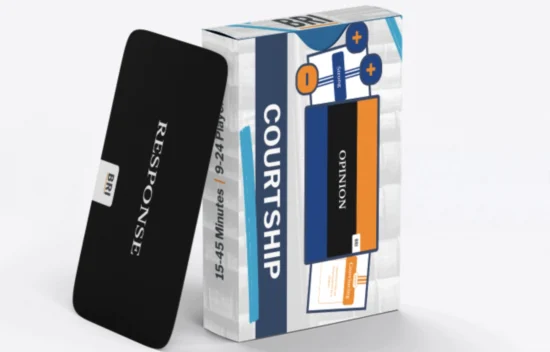
ActivityCourtship Government and Politics Card Game
A judging and deductive reasoning game that explores the concept of analyzing a case and reapplying it elsewhere.