Unit
Unit 5: The Judiciary
Guiding question
What is the role of courts in the American constitutional order?

Guiding Question:
- What is the role of courts in the American constitutional order?
Objectives:
- Students will explain the purpose of courts.
- Students will describe the connections between the U.S. Supreme Court and the constitutional principles, institutions, processes, policies, and behaviors of the United States government.
- Students will differentiate court levels and describe the difference between state and federal courts and the difference between civil and criminal trials.
- Students will describe the facts, issues, holdings, reasonings, decisions, and opinions of landmark Supreme Court cases.
- Students will analyze documents to explain how Supreme Court cases relate to foundational documents and other primary or secondary sources.
Teacher resource
Unit 5: The Judiciary Branch Inquiry Organizer
What is the role of courts in the American constitutional order?
Lessons
What is the structure of the federal court system in the United States?
How does the Founding principle of the rule of law affect the daily lives of citizens?

What role does the Supreme Court play in the United States constitutional order?

What role does the Supreme Court play in the United States constitutional order?

A discussion guide that helps students analyze landmark Supreme Court cases, distinguishing between constitutional reasoning and personal opinions.
Is the Supreme Court the final authority on the meaning of the Constitution?
Unit resources

A student handout that details the responsibilities of the U.S. District Courts, U.S. Court of Appeals, and the Supreme Court.

An infographic outlining the structure and jurisdiction of the three levels of federal courts: District Courts, Courts of Appeals, and the Supreme Court.

The text of Lincoln's speech and corresponding analysis questions.

Explore the role of judicial review and precedent in Supreme Court decisions and analyze cases to understand how the Court maintains consistency.

A student handout that helps students articulate the main arguments and implications of the decisions in nine Landmark Supreme Court Cases.

The text of Federalist 78 and corresponding analysis questions.

Help students define and understand judicial review by analyzing Federalist #78, Article III of the Constitution, and the Marbury v. Madison (1803) decision.

The text of Article III of the U.S. Constitution and corresponding comprehension questions.

Compares two Supreme Court cases through the lens of judicial review and a single founding principle.
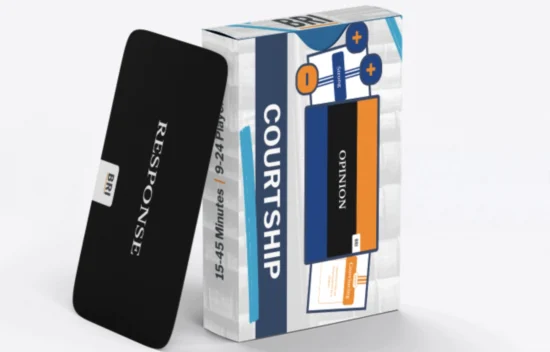
A judging and deductive reasoning game that explores the concept of analyzing a case and reapplying it elsewhere.

Narrative content that explores four eras of the Supreme Court: The Marshall Court, the Taney Court, The Warren Court, and the Modern Courts.

Explore the limits, powers, and expansion of the Court's interpretations over the course of U.S. history.
Standards
Related content

What happens when individual rights come into conflict with school policies—or government actions? In this video, explore how the judicial branch interprets the Constitution and settles real-life disputes that shape how we live, work, and learn. Learn how the federal court system is structured, what powers judges hold, and how landmark cases help define the meaning of liberty and justice in a constitutional republic. Discover why judicial review, the rule of law, and an independent judiciary are essential to protecting the rights of all Americans.
What happens when earlier court rulings shape decisions in today’s most pressing legal battles? In this video, explore how the judicial branch uses precedent to interpret the Constitution and resolve real-life disputes that influence how we live, work, and learn. Learn how the principle of stare decisis—standing by things decided—guides judges in applying consistent standards, ensures fairness, and helps people and institutions rely on the rule of law. From landmark decisions like Mapp v. Ohio to Brown v. Board of Education, see how precedent can both preserve and reshape justice in a constitutional republic.