Lesson
Paideia Seminar: Christopher Columbus
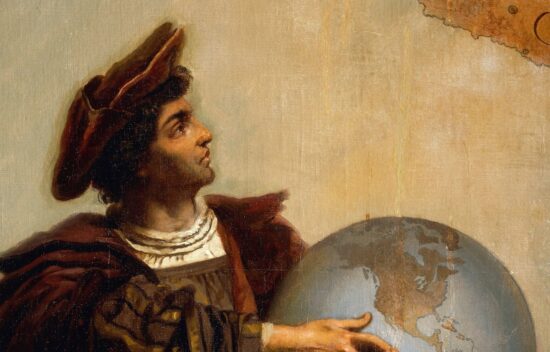
Objectives:
- Students will be able to analyze a primary source to draw conclusions about the effect and legacy of Christopher Columbus.
- Students will be able to evaluate the effect of Christopher Columbus’s voyage to the New World and determine the positive and negative consequences.
Materials
- Columbus’s Letter to Ferdinand and Isabella of Spain, 1494 Primary Source Activity
- Handout A: Paideia Seminar Goals and Notes
- Handout B: Paideia Seminar Questions
- Handout C: Paideia Seminar Reflection
- Handout D: Paideia Seminar Rubric
- Handout E: Individual Goal Bank
- Handout F: Discussion Starters
- Extra paper for name tents
- Markers if desired
Lesson Components

Use this primary source text to explore key historical events.
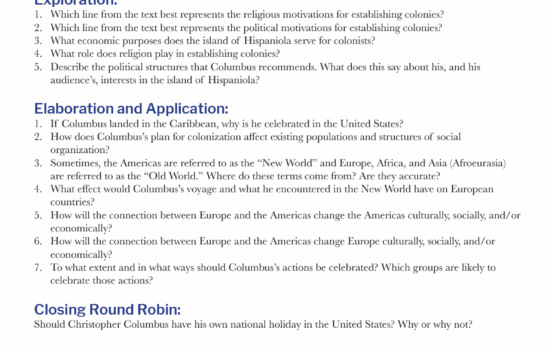
Questions to help students explore the topics related to Christopher Columbus' exploration of the new world.
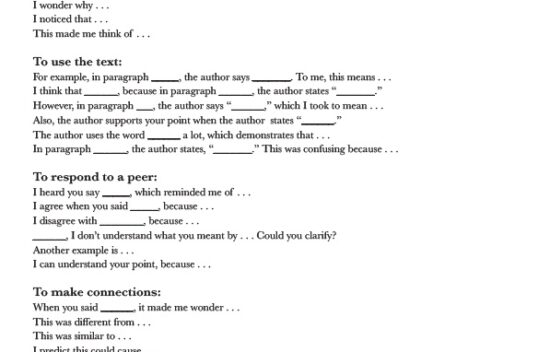
A handout to start students on the discussion prompts for the Paideia Seminar.
A handout to aid students in primary source analysis that helps them draw conclusions about the effect and legacy of Christopher Columbus.
A follow-up activity to use after the seminar activity.
A rubric to help students assess their contributions to during a Paideia Seminar.
Lesson plan
More Information
A Paideia Seminar is similar to a Socratic seminar but is intended to interrogate a single text or a pair of texts. The purpose of this activity is to allow students to discuss their understanding freely and openly in an academic fashion, and to collectively build understanding of a topic.
For this activity, students should be arranged in a circle or a square so that all students can see and hear each other without obstructions. If necessary, students can be arranged in a “fishbowl,” with half the students on the outside circle, who will not speak in the first half of discussion, and the other half on the inside, who will be the main participants in the first half of discussion. Students can then be paired to observe and record a partner’s participation in the discussion and then switch halfway through the questions.
To cultivate civil discourse, it is important that the teacher and students respect the good will of others, regardless of their views and opinions. The teacher should only interject to correct a misconception or understanding, to redirect or refocus the conversation back to the question, or to present a new question to the group. Not all questions need to be asked for the seminar to be successful; the questions asked are up to the teacher’s (and potentially students’) discretion.
The teacher should also keep track of student participation in the discussion using Handout D: Paideia Seminar Rubric and ideally provide this specific feedback to students with specific goals for developing their civil discourse skills in speaking and listening. Because this material is presented near the beginning of the course, this activity can be greatly beneficial to building classroom culture. If students are at first uncomfortable with free discussion, they can be provided with Handout F: Discussion Starters.
Standards
Advanced Placement
- Topic 1.4 · Columbian Exchange, Spanish Exploration, and Conquest
- Theme · Geography and the Environment
- Learning Objective · Unit 1D
- Historical Development · 1.2.II.A
- Reasoning Skill · Developments and Processes
- Reasoning Skill · Sourcing and Situation
- Reasoning Skill · Claims and Evidence in Sources
- Reasoning Skill · Contextualization
- Reasoning Skill · Argumentation
Check whether this resource aligns with your state’s standards →
Related materials

Should Columbus' actions be viewed from a modern lens, or based on the values of his time? Mark Christensen shares two views on this question.


What do we truly mean when we refer to America as the New World? Join Kirk in this episode of Primary Source Close Reads as he explores Christopher Columbus’s letter to King Ferdinand and Queen Isabella of Spain after first landing in the Americas. He’ll examine excerpts to understand what “new” meant to both Columbus and the Native Americans that he encountered. What does the language of this letter reveal about Columbus’ thought process when first arriving in the Americas? Why is it important to read and discuss documents to develop historical reasoning skills?