Lesson
The Bill of Rights – Docs of Freedom

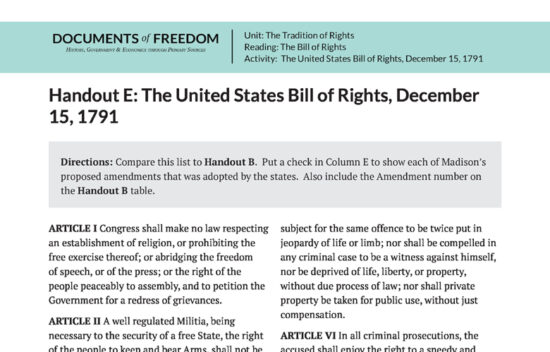
The Anti-Federalists had many objections to the Constitution, and one of them was that it did not have a bill of rights. Madison was worried that listing some rights would leave those rights that weren’t listed more vulnerable to infringement. But Jefferson put aside Madison’s concerns about the risks of a partial listing of rights, arguing, “Half a loaf is better than no bread. If we cannot secure all our rights, let us secure what we can.” Amid the drama of the ratification debate, Madison promised to introduce amendments in Congress. The Bill of Rights, a list that would serve to clarify and emphasize the limited nature of the national government, was ratified and added to the Constitution in 1791.
Lesson Components

Lesson plan
Click a phase to open it
Key Terms
- Federalist Papers
- Bill of rights
- Tenth Amendment
- property
- Articles of Confederation