Lesson
The Civil Rights Movement
Guiding question
Assess the role played by the Supreme Court as the protector of individual rights against the tyranny of the majority in Brown v. Board of Education (1954).

The Civil Rights Movement sought to win the American promise of liberty and equality during the twentieth-century. From the early struggles of the 1940s to the crowning successes of the Civil Rights and Voting Rights Acts that changed the legal status of African-Americans in the United States, the Civil Rights Movement firmly grounded its appeals for liberty and equality in the Constitution and Declaration of Independence. Rather than rejecting an America that discriminated against a particular race, the movement fought for America to fulfill its own universal promise that “all men are created equal.” The Civil Rights Movement worked for American principles within American institutions rather than against them.
Founding Principles
Objectives
- Students will analyze a series of primary source documents in a Document Based Question (DBQ) format in order to evaluate the role of the Supreme Court as protector of individual rights from the 1870s through the 1960s.
Materials
Educator Resources
- Handouts A – H Answer Keys
- Handout I Primary Sources Answer Key
- Handout K Focus Questions Answer Key
- Handouts L – M Answer Keys
Student Handouts
- The Civil Rights Movement Essay
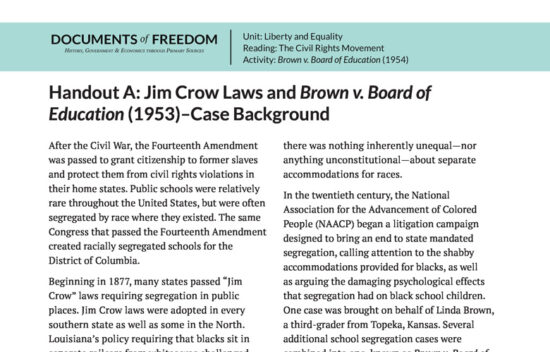
- Handout A: Case Background: Jim Crow Laws and Brown v. Board of Education
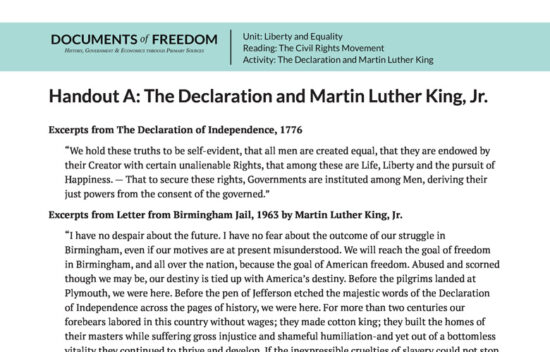
- Handout A: The Declaration and Martin Luther King, Jr.
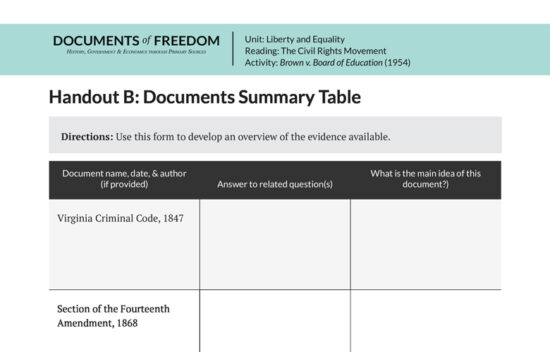
- Handout B: Document Summary Table
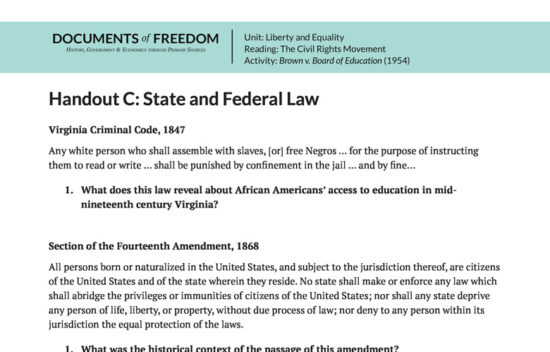
- Handout C: State and Federal Law
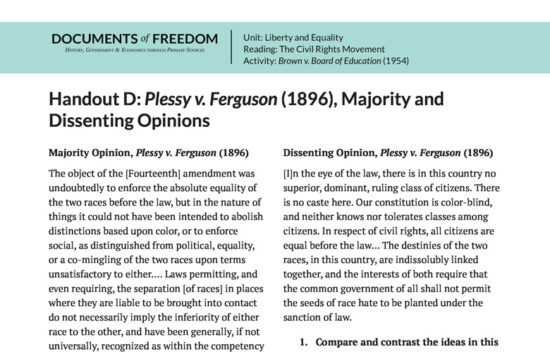
- Handout D: Plessy v. Ferguson (1896), Majority and Dissenting Opinions
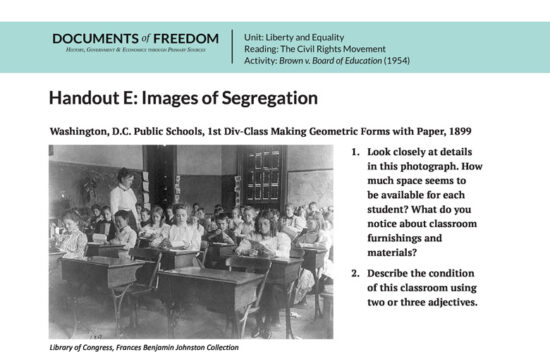
- Handout E. Images of Segregation
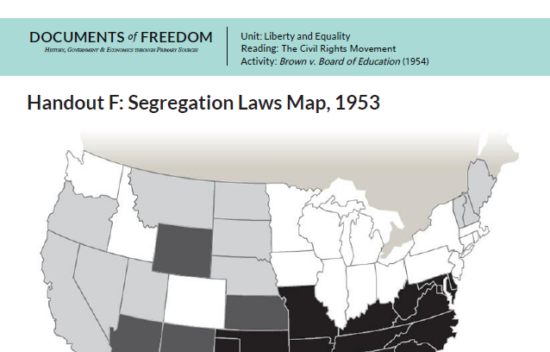
- Handout F: Segregation Laws Map, 1953
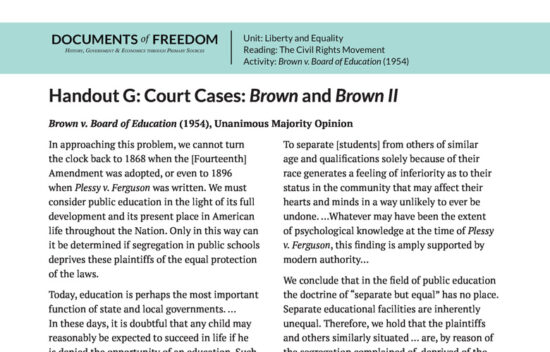
- Handout G: Court Cases: Brown and Brown II
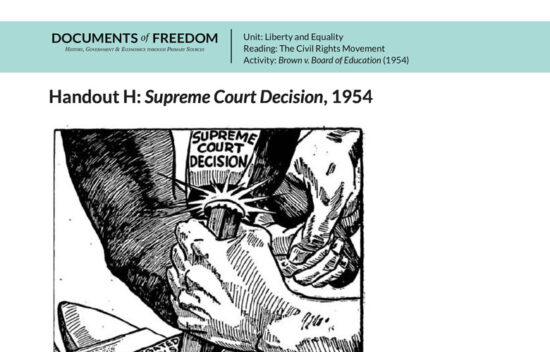
- Handout H: Supreme Court Decision
- Handout I: Primary Sources on the Right to Petition and Assemble Peaceably
- Handout J: Perseverance
- Handout K: Focus Questions
- Handout L: Selma to Montgomery
- Handout M: What Happened Between Selma and Montgomery
Lesson Components
ActivityHandout C: State and Federal Law
ActivityHandout E: Images of Segregation
ActivityHandout J: Perseverance
ActivityHandout K: Focus Questions
Load more
Lesson plan
90 minClick a phase to open it
Key Terms
- Equality
- Civil rights
- Suffrage
- Selma, AL
- Liberty