Lesson
The Civil War and the Industrial Revolution
Guiding question
In what ways did post-Civil War economic policies represent a change in the role of the federal government in inter and intrastate commerce?

When eleven slave states seceded in 1860-61, they left the federal government in the hands of the new Republican Party. The Republicans were dedicated above all to ending slavery and preserving the Union, but many of them also advocated a revival of the Federalist and Whig system of national mercantilism, which sought to have the federal government shape economic development.
Guiding Questions
- In what ways did post-Civil War economic policies represent a change in the role of the federal government in inter and intrastate commerce?
- In what ways did these economic policies demonstrate continuity?
Objectives
- Describe President Cleveland’s view on the role of the federal government in intrastate economic matters.
- Explain the purpose of the Interstate Commerce Act and the Sherman Antitrust Act.
- Assess the degree to which the interpretation of and policy regarding the interstate commerce clause changed in the late 19th century.
Materials
Educator Resources
Student Handouts
Lesson Components
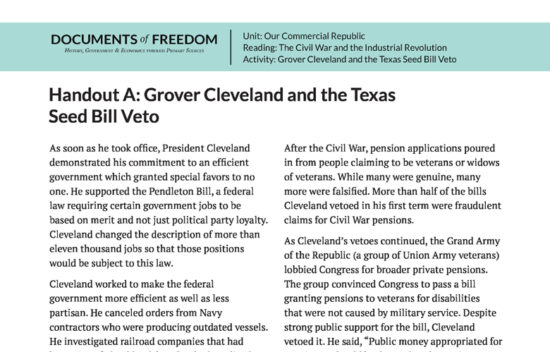
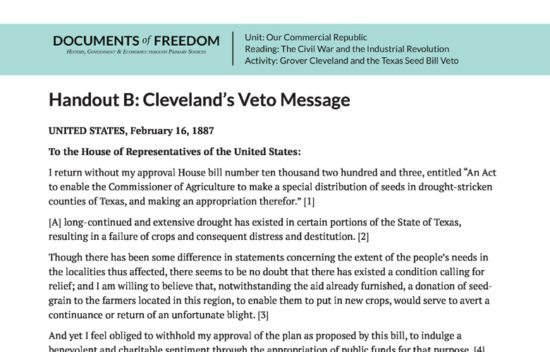
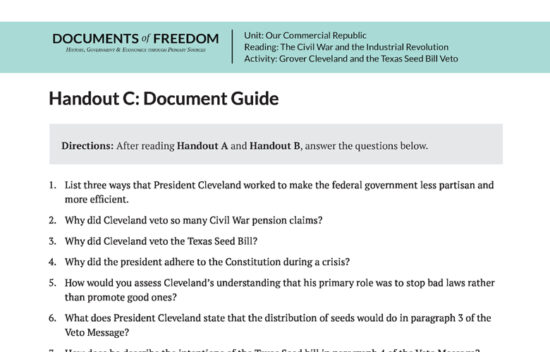
ActivityHandout C: Document Guide


EssayEssay: The Civil War and the Industrial Revolution
When eleven slave states seceded in 1860-61, they left the federal government in the hands of the new Republican Party. The Republicans were dedicated above all to ending slavery and preserving the Union, but many of them also advocated a revival of the Federalist and Whig system of national mercantilism, which sought to have the federal government shape economic development.
Lesson plan
130 minClick a phase to open it
Key Terms
- Constitution
- Property
- Mercantilism
- Interstate
- Intrastate
More Information
This lesson is designed for students in grades 9-12. Students should have a basic understanding of interstate and intrastate commerce coming into the lesson.