Lesson
The True Meaning of Democracy: Eleanor Roosevelt, Marian Anderson, and Respect

In this lesson, students will learn about the respectful action of Eleanor Roosevelt towards Marian Anderson. They will explore how this demonstration of respect helped shape Mrs. Roosevelt’s purpose and identity and learn how similar displays in their own lives can help them in like manner.
Founding Principles
Guiding questions
Walk-In-The-Shoes Questions
As you read, imagine you are the protagonist.
- What challenges are you facing?
- What fears or concerns might you have?
- What may prevent you from acting in the way you ought?
Observation Questions
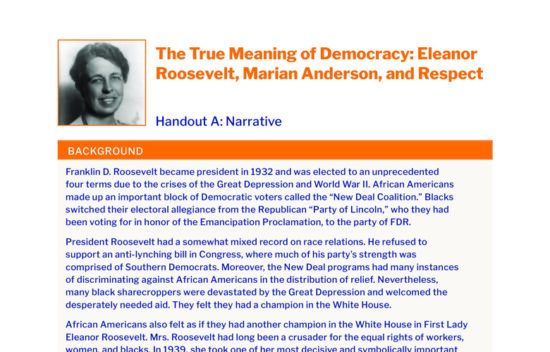
- Who was Eleanor Roosevelt and what was her relationship to Marian Anderson?
- How did Eleanor Roosevelt show respect toward Marian Anderson?
- How do you treat others with respect in your life?
- What does Eleanor Roosevelt’s demonstration of respect reveal about her identity?
Discussion Questions
Discuss the following questions with your students.
- What is the historical context of the narrative?
- What historical circumstances presented a challenge to the protagonist?
- How and why did the individual exhibit a moral and/or civic virtue in facing and overcoming the challenge?
- How did the exercise of the virtue benefit civil society?
- How might exercise of the virtue benefit the protagonist?
- What might the exercise of the virtue cost the protagonist?
- Would you react the same under similar circumstances? Why or why not?
- How can you act similarly in your own life? What obstacles must you overcome in order to do so?
Learning objectives
- Students will analyze Eleanor Roosevelt’s show of respect toward Marian Anderson in 1939.
- Students will understand how being respectful can help shape their identity and purpose.
- Students will apply this knowledge to pursue more respectful actions in their own lives.
Lesson Components
Standards
Advanced Placement
- Respect,
Check whether this resource aligns with your state’s standards →