Lesson
Thomas Jefferson and Prudence
Founding Principles
Virtues
Guiding questions
Essential Question
- How can prudence help leaders make decisions in difficult circumstances?
Guiding Questions
- What does prudence mean? What are examples of prudence that you observe today?
- How did Thomas Jefferson display prudence in his acquisition of the Louisiana Territory?
- How can we apply prudence to decision making situations in our lives?
Learning Objectives
- Students will analyze the story of Thomas Jefferson and the Louisiana Purchase to identify examples of prudence in decision-making.
- Students will practice roleplaying to understand the importance of prudence in a leader.
- Students will apply prudence to make informed decisions in their own lives.
Materials
Student Resources
Teacher Resources
- Analysis Questions
- Virtue in Action
- Journal Activity
- Sources for Further Reading
- Virtue Across the Curriculum
Lesson Components
Lesson plan
Key Terms
- Prudence
- Practical wisdom that applies reason and other virtues to discern right courses of action in specific situations.
- Sovereign
- Possessing ultimate authority
- Yeoman
- Owner of a small amount of land.
- Consolidation
- Combining to make into one.
- Assumption
- To take responsibility for.
More Information
Procedures
- The following lesson introduces students to the civic virtue of prudence.
- Students will engage with the story of Thomas Jeferson as they consider the question: How can prudence help leaders make decisions in difficult circumstances?
- The main activity of this lesson requires students to analyze the story and actions of Thomas Jefferson. Students may work individually, in pairs, or in small groups as best fits your classroom. The analysis questions provided can be used to help students comprehend and think critically about the content. As the teacher, you can decide which questions best fit your students’ needs and time restraints.
- Lastly, the lesson includes sources used in this lesson for further reading and suggestions for cross-curricular connections.
Standards
Related materials

How can prudence help leaders make decisions in difficult circumstances? Explore the story of Thomas Jefferson in this video feature of BRI's Heroes and Villains Curriculum to help determine how he exhibited the virtue of prudence. Heroes and Villains uses narratives to discuss the concepts of civic virtue in all classrooms. Each virtue narrative includes corresponding discussion guides, journal templates, a toolbox with additional activities, and suggestions for further reading on each topic or virtue.

Thomas Jefferson hoped that he would be remembered for three accomplishments: his founding of the University of Virginia, his crafting of the Virginia Statute for Religious Freedom,
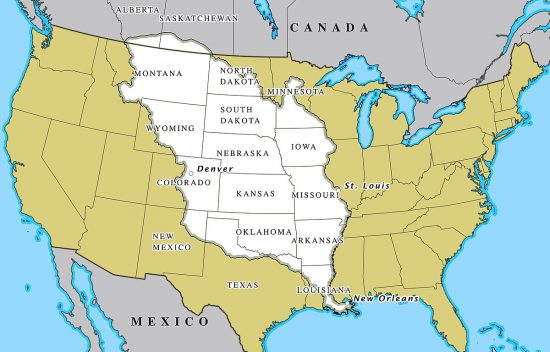
President Thomas Jefferson, elected at the end of the Quasi-War with France, faced domestic unease when Spain returned Louisiana to France at Napoleon’s insistence. Aware of the strategic importance of New Orleans and wary of Napoleon’s desire to build an empire in North America, Jefferson sent negotiators to France to purchase land east of the Mississippi. As time went on, though, France had other priorities and in the spring of 1803 offered the United States the whole Louisiana territory—more than 800,000 acres—for $15 million. Jefferson had always feared the costs of loose construction of the powers delegated to the national government in the Constitution, and the Constitution did not provide for the incorporation of news lands into the US. Jefferson urged bringing the issue to the people to approve with a constitutional amendment, but a special session of Congress disregarded his draft amendment. The Senate ratified the Louisiana Purchase Treaty in October of 1803. While Jefferson did his best to follow what he believed was proper constitutional procedure, not enough of his contemporaries agreed with him and he eventually assented.