Unit
The Foundations of American Government
Guiding question
America's Founders looked to the lessons of human nature and history to determine how best to structure a government that would promote liberty. They started with the principle of consent of the governed: the only legitimate government is one which the people themselves have authorized. But the Founders also guarded against the tendency of those in power to abuse their authority, and structured a government whose power is limited and divided in complex ways to prevent a concentration of power. They counted on citizens to live out virtues like justice, honesty, respect, humility, and responsibility.
- 6 Lessons
- 30 Activities
- 6 Essays

Are people good or evil? Your answer probably depends on how you have seen people around you behave. If you have studied history, the answer might further depend on what you think of past wars, as well as how people manage to live alongside one another in peace. People can be both hateful and noble, can’t they? James Madison, an ardent student of political philosophy, put it this way:
If men were angels, no government would be necessary. If angels were to govern men, neither external nor internal controls on government would be necessary. In framing a government which is to be administered by men over men, the great difficulty lies in this: you must first enable the government to control the governed; and in the next place oblige it to control itself. A dependence on the people is, no doubt, the primary control on the government; but experience has taught mankind the necessity of auxiliary precautions. (Federalist No. 51)
Lessons

The Declaration of Independence was drafted by Thomas Jefferson in June of 1776. The Declaration announced to the world that the thirteen American colonies regarded themselves independent sovereign states. It articulates the fundamental ideas that form the American Nation: All people are created free and equal and possess the same inherent, unalienable rights. This lesson plan includes six activities. The activities can be taught in sequence as a comprehensive overview of the Declaration of Independence or individual activities can be taught as stand-alone lessons.

What were the Founders’ concepts of justice, liberty, and rights and where did those concepts came from? How have these ideas changed over time? Use these primary sources to analyze.

In 1787, many Americans were concerned that the Articles of Confederation did not grant enough power to the central government to protect the rights of the people. Under the Articles, the national government was unable to regulate commerce, taxation, currency, treaties, and protect the rights of individuals and states. The states called a delegation to meet in Philadelphia in the summer of 1787 and from that convention the new Constitution was born.

All humans are born with equal inherent rights, but many governments do not protect people's freedom to exercise those rights. The way to secure inalienable rights, the Founders believed, was to consent to giving up a small amount of our freedom so that government has the authority to protect our rights. Freedom depends on citizens having the wisdom, courage, and sense of justice necessary to take action in choosing virtuous leaders, and in holding those leaders to their commitments.

The Founders believed that the government’s authority needed to come from the people. Under the reign of King George III, the colonists believed that they were deprived of their opportunity to consent to be governed by Parliament through representatives, and, therefore, the British could not force their laws upon the colonies. The Founders made sure to uphold this right in the American Constitution. The people, through their representatives at state ratification conventions, had to ratify the document in order for it to become law.
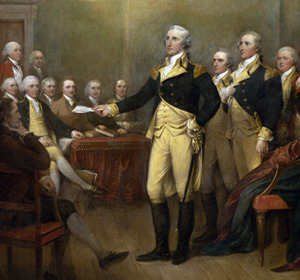
The benefits of freedom are safest when officials cannot make arbitrary and unpredictable laws. The rule of law means that laws are stable, limited in scope, and applied to every citizen, including those who make them. Laws must be created in the open, according to clear rules, and must reflect the consent of the governed. Ultimately, the rule of law depends on people with the courage, self-reliance, and wisdom to make prudent decisions, and who have enough tolerance for others to let them live as they see fit.