Unit
Unit 3: The Legislative Branch
Guiding question
How does the structure of government influence the process of lawmaking and reflect the will of the people?

Guiding Question:
- How does the structure of government influence the process of lawmaking and reflect the will of the people?
Objectives:
- Students will analyze the purpose and role of the legislature in the Constitution.
- Students will explore the distinct constitutional responsibilities of the House and the Senate and how these differences affect the decisions representatives make.
- Students will analyze key Supreme Court cases, including Baker v. Carr (1962) and Shaw v. Reno (1993), that have shaped redistricting and representation in Congress.
- Students will explain the process and importance of consensus building in self-governance.
Teacher resource
Unit 3: The Legislative Branch Inquiry Organizer
How does the structure of government influence the process of lawmaking and reflect the will of the people?
Lessons

How does the structure of government impact the way decisions are made in society?

What is the relationship between gerrymandering, the concept of representation, and the principle of consent of the governed?

What does it mean to be represented in government?

How can members of Congress best represent their constituents?

How are my views and values represented in the American government?

How can the people ensure their local interests are represented at the national level?
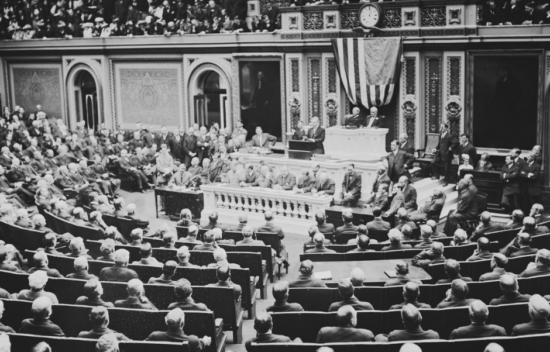
Is Congress broken?
Unit resources
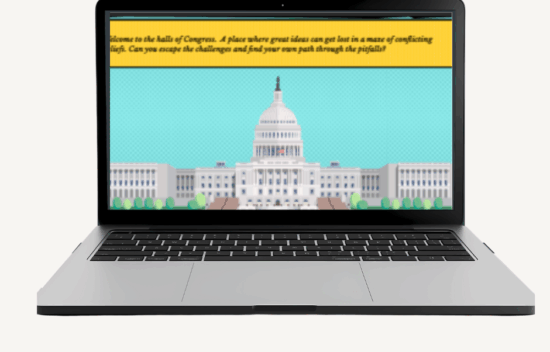
An interactive, device-based game that helps students understand the working of Congress.

An annotated version of the U.S. Constitution with key terms defined.

An annotated version of Federalist 55 with key terms defined and comprehension questions.

An annotated version of Federalist 62 with key terms defined and comprehension questions.

A detailed explanation of the steps a bill must take to become a law under the U.S. Constitution.

Student Handouts that detail the steps that must occur for a bill to become a law under the U.S. Constitution.

A visual representation that details the various positions in a Congressional office.

A graphic organizer to help students explore the Civil Rights Act and Immigration Reform legislation as they seek to understand the process of legislative consent building.
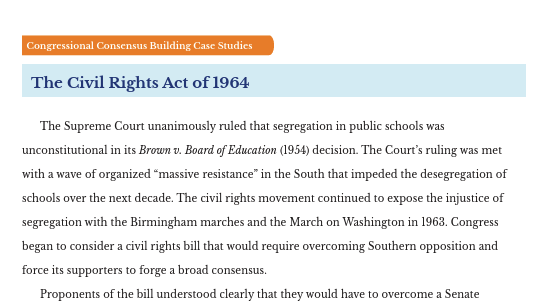
Narratives on the Civil Rights Act and Immigration Reform legislation that helps students understand the process of legislative consent building.

A student handout out that defines the terms enumerated and implied powers and provides details on the powers themselves.

What checks and balances exist to ensure one branch of the federal government does not act without restraint? Explore the Watergate case, the power to declare war, and the Commerce Clause as examples that illustrate this principle.

How have the interactions among the three branches of government changed over time?
Standards
Related content

What makes the U.S. Congress the cornerstone of our democracy? Dive into the Constitution's Article I, where the framers designed the legislative branch to safeguard liberty while balancing power and passion. This video uncovers the structure of Congress as a bicameral legislature, composed of the House of Representatives and the Senate, each with distinct roles and responsibilities. From shaping laws to tackling debates that influence your education, freedoms, and daily life, Congress is where reason meets passion. Learn how its design fosters deliberation, curbs oppression, and drives liberty in action. This video ties into Unit 3 of the Bill of Rights Institute's Government and Politics: Civics for the American Experiment curriculum. Explore the role of the legislature, the constitutional responsibilities of the House and Senate, and the Supreme Court cases that define representation and redistricting.

What makes the U.S. Senate a cornerstone of American democracy? Designed as a deliberative body, the Senate ensures stability, represents state interests, and upholds the principles of federalism. But how does it fulfill these crucial roles, and why does it matter? Explore the unique structure of the Senate, its differences from the House of Representatives, and the exclusive powers that set it apart. From confirming federal nominations and ratifying treaties to serving as the jury in impeachment trials, discover how the Senate balances representation and governance—giving every state an equal voice in shaping our nation’s future.

What makes the U.S. Congress the cornerstone of our democracy? The framers designed the legislative branch to be the most powerful—closest to the people, representing their voices, and shaping the laws that govern our nation. But how does the House of Representatives fulfill this role, and why does it matter? Explore the structure of the House, the differences between the House and Senate, and the unique powers that set it apart. From drafting legislation and overseeing the executive branch to ensuring representation through frequent elections, discover how the House reflects the will of the people and upholds the principles of self-government.

What makes the U.S. Congress the cornerstone of our democracy? The framers designed it to be the most powerful branch—closest to the people, representing their voices, and shaping the laws that govern our nation. But what does representation really mean, and why does it matter? Learn about the structure of Congress, the differences between the House and Senate, and the models of representation that guide lawmakers. From debate and deliberation to consensus-building, discover how Congress ensures diverse perspectives are heard and why its design is essential to protecting liberty and self-government.

From committees and procedures to filibusters and cloture votes, Congress relies on a complex system of rules to manage debate, encourage compromise, and shape how laws are made. But how do these rules work in practice—and why do they matter? Explore how the House and Senate organize themselves, the different paths a bill can take, and why most legislation never becomes law. Discover how congressional rules have evolved over time, and how they balance the need for deliberation with the urgency of action in a representative democracy.

How do government, politics, and civics work in everyday life? Join Emerald Garrett, a Senior Legislative Assistant as she shares her journey from a young student passionate about foreign languages to Congress. Learn how her unique path and dedication to public service have helped her contribute meaningfully to the legislative process. This video ties into the Bill of Rights Institute's Government and Politics: Civics for the American Experiment curriculum, specifically Unit 3, which examines the purpose and role of the legislature in the Constitution. Emerald's story highlights the importance of young voices in shaping Congress and demonstrates the power of civic engagement in a representative democracy.

How do government, politics, and civics work in everyday life? Join Jaydn Smith a Senior Legislative Assistant as he shares his journey from growing up on a Nebraska farm to Congress. Learn how his passion for public service and dedication to helping his community have allowed him to craft impactful legislation and contribute meaningfully to the legislative process.